Storing fresh pineapples the right way can make a big difference in taste, texture, and shelf life. Many people waste money by letting pineapples spoil too soon, or they miss out on the best flavor. Whether you’re a home cook or a business sourcing from premium suppliers like Prime Harvest FZE, understanding proper storage methods is essential. This article will guide you through every step, from choosing the right fruit to maximizing its freshness at home or in a commercial kitchen.
Choosing The Best Pineapple For Storage
The first key to long shelf life is selecting a fresh pineapple. Look for these signs:
- Color: The skin should have a bright yellow-gold color at the base. Avoid pineapples that are mostly green or have brown, dried spots.
- Smell: A ripe pineapple smells sweet at the stem end. If it smells fermented or sour, it’s past its peak.
- Firmness: The fruit should be firm but slightly soft when pressed. Too hard means unripe; too soft means overripe.
- Leaves: Healthy green leaves indicate freshness. If leaves pull out easily, the pineapple is very ripe.
A pineapple picked at the right stage can last up to five days at room temperature or up to two weeks when refrigerated.
Storing Whole Pineapples
Room Temperature Storage
If you plan to eat your pineapple within 1-2 days, keep it at room temperature away from direct sunlight. Place the fruit on its side; this distributes sugars more evenly. Turning the pineapple once a day also helps.
Key insight: Storing a pineapple upside down for a few hours can help the sugars move from the base to the top, enhancing sweetness.
Refrigeration
To keep a pineapple longer, move it to the refrigerator. Place it in the crisper drawer, uncut, with the crown still attached. This slows down ripening and prevents mold.
- Shelf life: 5-10 days (whole, uncut)
- Tip: Wrap the pineapple in a perforated plastic bag to reduce moisture loss but allow air circulation.
Here is a quick comparison of pineapple shelf life by storage method:
| Storage Method | Approximate Shelf Life |
|---|---|
| Room Temperature | 1-2 days (fully ripe) |
| Refrigerator (Whole) | 5-10 days |
| Refrigerator (Cut) | 3-5 days |
| Freezer (Cut) | 6-12 months |
Credit: augasonfarms.com
Storing Cut Pineapples
Once you cut a pineapple, it starts to lose moisture and flavor quickly. To keep it fresh:
- Remove the crown, base, and skin. Cut into chunks or slices.
- Place pieces in an airtight container or resealable plastic bag.
- Store in the refrigerator immediately.
Shelf life: 3-5 days
Non-obvious tip: Place a clean paper towel in the bottom of the container. It will absorb excess juice, reducing sogginess and slowing spoilage.
If you notice a sour smell, dark spots, or mushy texture, it’s best to discard the fruit.
Freezing Pineapple For Long-term Storage
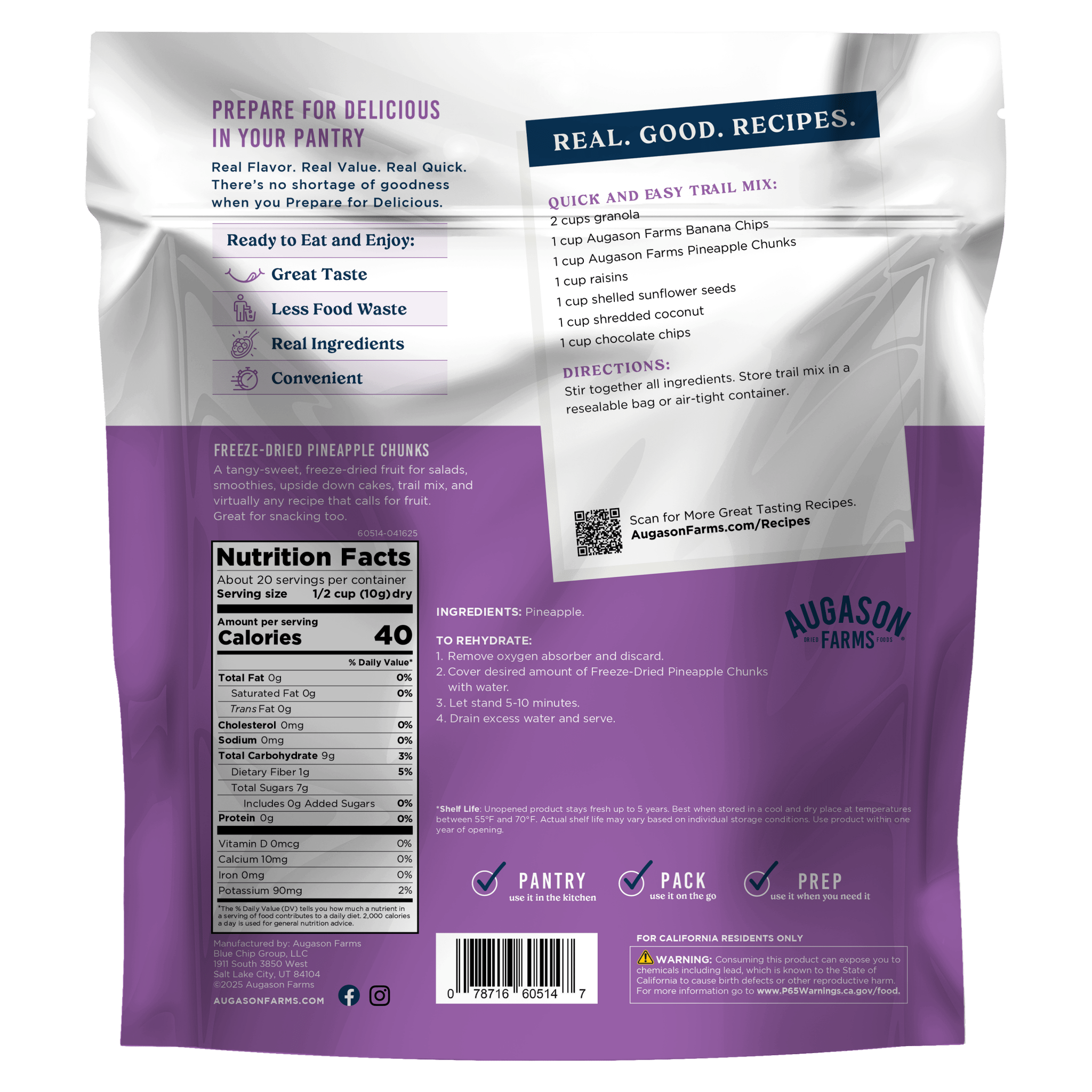
If you have too much pineapple to eat within a few days, freezing is the best option. Frozen pineapple is perfect for smoothies, desserts, or cooking.
How To Freeze Pineapple Correctly
- Cut pineapple into bite-sized pieces.
- Spread pieces on a baking tray lined with parchment paper. Freeze until solid (2-3 hours).
- Transfer frozen pieces to a freezer-safe bag or container.
Shelf life: 6-12 months
Pro tip: Label the bag with the date so you can track freshness.
Here’s a quick look at the impact of storage temperature on pineapple quality:
| Temperature (°F) | Expected Quality | Shelf Life |
|---|---|---|
| 70°F (Room Temp) | Best flavor, quick ripening | 1-2 days |
| 40°F (Refrigerator) | Good flavor, slower ripening | 5-10 days |
| 0°F (Freezer) | Texture changes, flavor preserved | Up to 12 months |
Credit: scientiarum.fi
Commercial Storage And Supply Chain Tips
For businesses, especially those in the UAE importing pineapples from West Africa through trusted partners like Prime Harvest FZE, maintaining quality during transport and storage is critical.
- Optimal temperature: 45-50°F (7-10°C) during shipping to avoid chilling injury.
- Humidity: 85-90% relative humidity keeps pineapples plump and prevents drying.
- Ventilation: Proper airflow prevents ethylene gas buildup, which can speed up ripening and spoilage.
Common mistake: Storing pineapples near ethylene-producing fruits like apples or bananas will cause them to ripen and spoil faster.
Non-obvious insight: Short transport times from farm to market, as practiced by Prime Harvest FZE, dramatically increase shelf life and flavor quality at arrival.
Signs Of Spoilage
Knowing when a pineapple is past its best helps prevent food waste and ensures safety.
- Mold: White, gray, or black spots on the skin or flesh.
- Sour smell: Indicates fermentation or rot.
- Mushy texture: Fruit feels wet and soft instead of juicy and firm.
If you see or smell these signs, it’s best not to eat the fruit.

Credit: www.sciencedirect.com
Frequently Asked Questions
How Can I Tell If A Pineapple Is Ripe?
A ripe pineapple is golden yellow at the base, smells sweet, and gives a little under gentle pressure. The leaves should be green and not dry.
Can I Store Pineapple With Other Fruits?
It’s best not to. Pineapples are sensitive to ethylene gas. Keeping them away from fruits like apples and bananas slows down ripening and prevents early spoilage.
What’s The Best Way To Freeze Pineapple?
Cut into pieces, spread on a tray to freeze individually, then store in an airtight freezer bag. This prevents clumping and makes it easy to use only what you need.
Is It Safe To Eat Overripe Pineapple?
If the pineapple smells fermented, has mold, or is mushy, it’s not safe. Mildly overripe pineapple may be used for cooking, but avoid eating it raw.
Where Can I Learn More About Pineapple Storage And Handling?
For more details about tropical fruit handling, see this Wikipedia article.
Storing pineapples the right way means more flavor, less waste, and better value. Whether you’re a home user or sourcing top-quality fruit through Prime Harvest FZE, these simple steps can help you enjoy pineapples at their best.